
Kinza Herb: The Eurasian Kitchen Staple That North Americans Know as Cilantro
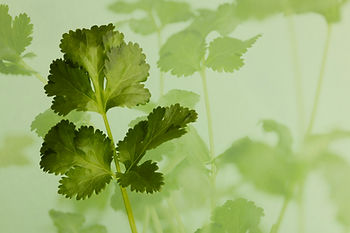
Kinza (кинза) is the Russian word for cilantro — the leaves and stems of the coriander plant (Coriandrum sativum). In Russia, Georgia, Armenia, Uzbekistan and across Central Asia, kinza is not a garnish. It is a primary ingredient in soups, stews, dumplings, sauces, grilled meat dishes, salads and pickles. Dried kinza works as a concentrated seasoning for long-cooked dishes where the herb's flavor needs to survive hours of heat. Kinza seeds (known in English as coriander seeds) are a separate spice entirely, with a warm, citrusy flavor used in spice blends from Indian garam masala to Georgian khmeli-suneli.
If you have found a recipe calling for kinza and are wondering what it is: it is cilantro. Same plant, same flavor. The confusion is purely linguistic. In North America, the leaves are called cilantro and the dried seeds are called coriander. In Russia and the post-Soviet world, the leaves are kinza and the seeds are koriandr (кориандр). Internationally, "coriander" refers to the whole plant: leaves, stems and seeds.
Kinza Herb in Russian and Georgian Cooking
Americans tend to associate cilantro with Mexican and Southeast Asian food. In those cuisines, it is ubiquitous. What most Americans do not realize is that kinza is equally essential across Russian, Georgian and Central Asian cooking traditions. Richters, a Canadian specialty herb nursery, notes plainly: "Not many know that fresh cilantro is an essential ingredient in Russia and the Central Asian republics. It, along with parsley and dill, can be found in markets in virtually every city and town."
The Russians grow their own kinza varieties. Richters sells a cultivar called 'Hacor': a slow-bolting Russian cilantro with a spicier flavor than standard American or Mexican types.
Georgian Cuisine
Georgian cooking leans on kinza heavily. Georgian Recipes, a resource documenting traditional Georgian food, lists coriander seeds and kinza leaves as foundational Georgian spices alongside blue fenugreek, summer savory, dried hot pepper, and parsley.
Specific Georgian dishes that call for kinza:
Khinkali (ხინკალი): Georgia's signature soup dumplings. The filling is spiced meat (usually beef and pork, sometimes lamb) seasoned with kinza and Georgian spices.
Chakhokhbili (ჩახოხბილი): chicken braised with tomatoes, onions and herbs. Kinza is added both during cooking and as a finishing herb.
Tolma (ტოლმა): stuffed grape leaves or peppers, filled with meat, rice, onion and kinza.
Georgian salads: Yandex's food reference confirms that kinza is standard in Georgian salads, where it adds brightness alongside the spice blend khmeli-suneli.
Khmeli-suneli (ხმელი-სუნელი), Georgia's most famous spice blend, contains dried kinza (coriander leaf) alongside ground coriander seed, blue fenugreek, dried marigold, bay leaf, mint, and other herbs. This blend is used across Georgian cooking the way garam masala is used in Indian cooking, as a finishing spice that goes into nearly everything.
Central Asian Cuisine
Across Uzbekistan, Tajikistan, Kazakhstan and Kyrgyzstan, kinza appears in pilaf (plov), lamb stews, grilled kebabs, cold salads, pickled vegetables, and flatbreads. The herb travels alongside cumin, garlic and dill as the core seasoning group of Central Asian cooking.
How to Use Dried Kinza Herb
Dried kinza is not a direct swap for the herb in its other form. The flavor changes during dehydration: volatile compounds evaporate, leaving a more muted, earthy, faintly floral character. That shift makes dried kinza ideal for applications where it will cook for a long time, blend into spice mixes, or serve as background flavor rather than a bright finish.
Substitution ratio: 1 teaspoon dried kinza = 1 tablespoon of the herb in its other form. Use one-third the volume when converting recipes.
When to add it: Early in the cooking process. Dried kinza needs time to rehydrate and release its flavor compounds. Adding it at the end — the way you would the herb in its other form — leaves the dried version papery and flavorless.
Best Uses for Dried Kinza
Soups and stews. Dried kinza holds up through hours of simmering. It works in Georgian kharcho (beef and walnut soup), Central Asian lamb stews, Mexican pozole, Indian dals, and any long-cooked bean dish. La Cadémie's culinary guide specifically recommends dried cilantro for "long-cooking recipes such as beans, soups, stew, arroz con pollo, and marinades" where it provides reliable background flavor.
Spice rubs and marinades. Dried kinza ground in a spice grinder blends into dry rubs for grilled meat, roasted vegetables, or fish. Combine with cumin, garlic powder, smoked paprika and black pepper for a basic rub that works on chicken, lamb or pork.
Spice blends. Dried kinza is a component of khmeli-suneli (Georgian), za'atar-adjacent blends (Middle Eastern), and various curry-style spice mixes. Mixing dried kinza with dried thyme, chamomile flowers, calendula petals, rosemary and sage creates a Georgian-inspired herbal tea blend or cooking herb mix.
Rice and grain dishes. Stir dried kinza into cooking liquid for rice, bulgur or couscous. The flavor infuses as the grain absorbs the liquid.
Dressings and sauces (rehydrated). Steep dried kinza in warm broth or water for 10 minutes before whisking into dressings, vinaigrettes, or yogurt-based sauces. The rehydration step softens the texture and releases flavor.
Toast it first. One pro technique: toast dried kinza lightly in a dry pan for 30–60 seconds before adding it to a recipe. This releases volatile oils and deepens the flavor.
How to Use Kinza Seeds (Coriander Seeds)
Kinza seeds — coriander seeds in English — are the dried fruit of the same plant but taste nothing like the leaves. The seeds are warm, nutty, with a citrusy sweetness. Linalool, the dominant volatile compound, constitutes over 50% of the essential oil (one analysis measured 67.75%, with alpha-pinene at 10.5% and gamma-terpinene at 9%).
Coriander seeds were one of the oldest recorded spices. The Egyptians called the plant "spice of happiness" and considered it an aphrodisiac. Romans and Greeks used coriander seeds to flavor wine and as medicine. Sugar-plums — the candy mentioned in 'Twas the Night Before Christmas — were originally candied coriander seeds.
How to Cook with Kinza Seeds
Whole seeds, temper in hot oil. This is the Indian technique: heat oil in a pan, drop in whole coriander seeds, let them pop and sizzle for 15–20 seconds until fragrant. The flavored oil becomes the base for curries, dals, and sautéed vegetables.
Crushed seeds, rubs and marinades. Crack coriander seeds with the flat side of a knife or a mortar and pestle. Crushed seeds go into spice rubs for grilled meat, fish marinades, pickling brines, and sausage seasonings.
Ground seeds, spice blends. Ground coriander is a required ingredient in Indian garam masala, curry powder, and chaat masala. It is essential in Ethiopian berbere. It shows up in North African ras el hanout, Georgian khmeli-suneli, and many Middle Eastern spice mixes.
In baking. Ground coriander adds warmth to rye bread, gingerbread, spice cookies, and fruit compotes. Scandinavian and German baking traditions use it frequently.
In pickling. Whole coriander seeds are a standard pickling spice alongside mustard seed, dill, and black peppercorn.
Kinza Seeds vs. Dried Kinza Herb
Dried Kinza Herb (Leaves) | Kinza Seeds (Coriander Seeds) | |
Plant part | Dried leaves and stems | Dried fruit (seed) |
Flavor | Earthy, muted floral, faint citrus | Warm, nutty, bright citrus |
Dominant compound | Decanal, dodecanal (aldehydes) | Linalool (67%+ of essential oil) |
Add when | Early in cooking (needs rehydration) | Early (whole/tempered) or mid-cooking (ground) |
Substitutes for | The herb in its other form (at 1:3 ratio) | Cumin (partially), caraway (partially) |
Key cuisines | Georgian, Central Asian, Mexican, Indian | Indian, Ethiopian, Georgian, Middle Eastern, Scandinavian |
These two products are not interchangeable. They taste different, behave differently in cooking, and serve different roles in a recipe. Many dishes call for both.
Health Benefits of the Kinza Herb
The vitamins, minerals, and antioxidants in coriander "provide significant health benefits." The herb and seeds are both full of vitamin K, which plays a critical role in blood clotting.
Vitamin K. One teaspoon of dried kinza herb provides a small but meaningful contribution to daily vitamin K intake. The herb is also rich in vitamin A (antioxidant function) and contains B vitamins.
Blood sugar. WebMD reports that coriander seeds have been shown to significantly lower blood sugar in people who have diabetes.
Heart health. Coriander has multiple effects that can benefit cardiovascular health, including potential cholesterol reduction.
Heavy metal chelation. One of the more unusual claims about kinza: it may act as a chelating agent, helping the body remove excess heavy metals. Chef's Mandala notes this property in their cilantro science profile, though the research is preliminary.
Digestive support. Coriander seeds are traditionally used across Indian, Georgian, and Central Asian cooking partly for their digestive benefits: reducing bloating and promoting gut comfort.
The soap gene. About 4–14% of people (estimates vary) perceive kinza as tasting like soap. This is genetically tied to the OR6A2 olfactory receptor gene, which detects the aldehyde compounds in the leaves. The dried form and the seeds do not trigger this reaction as strongly, since dehydration and seed development reduce aldehyde content.
How to Store Dried Kinza and Kinza Seeds
Dried kinza herb: Airtight container (glass jar preferred), cool and dark location, away from heat. Keeps 12–18 months with good flavor. Check aroma before use — a weak scent means diminished quality.
Kinza seeds (coriander seeds): Whole seeds keep longer than ground — up to 2 years in an airtight container. Ground coriander loses potency faster (6–12 months). A researcher at the Russian Academy of Sciences studied coriander seed storage conditions and found that keeping seeds in the dark preserved essential oil composition better than light-exposed storage.
Frequently Asked Questions
What is kinza herb?
Kinza (кинза) is the Russian word for cilantro: the leaves and stems of the coriander plant (Coriandrum sativum). It is the same herb Americans call cilantro and much of the world calls coriander leaf. The name kinza is used in Russia, Georgia, Armenia, Uzbekistan and across Central Asia, where the herb is a kitchen staple on the level of parsley and dill.
Is kinza the same as cilantro?
Yes. Kinza and cilantro are the same plant and the same product. The difference is language: kinza is Russian, cilantro is Spanish (adopted into American English). In North America, the leaves are called cilantro and the seeds are called coriander. In Russian, the leaves are kinza and the seeds are koriandr.
What does dried kinza taste like?
Dried kinza has an earthy, muted floral flavor with a faint citrus note. It is milder and less bright than the herb in its other form because dehydration removes volatile aldehyde compounds. The remaining flavor profile works well in long-cooked dishes where it provides background depth rather than a sharp herbal punch.
Can you substitute dried kinza for coriander seeds?
No. They come from the same plant but are different products with different flavors. Dried kinza (the herb) tastes earthy and faintly floral. Coriander seeds taste warm, nutty, and citrusy with a dominant linalool character. Many recipes call for both, and swapping one for the other will change the dish significantly.
What cuisines use kinza most?
Georgian, Russian, Central Asian (Uzbek, Tajik, Kazakh), Mexican, Indian, Thai, Vietnamese, Middle Eastern, and Ethiopian cuisines all use kinza heavily. The herb appears in Georgian khinkali and chakhokhbili, Central Asian plov, Mexican salsas, Indian chutneys, Thai curries, and Middle Eastern grain salads. It is one of the most widely used culinary herbs in the world.
Why does kinza taste like soap to some people?
Approximately 4–14% of people carry a variant of the OR6A2 gene that makes them perceive the aldehyde compounds in kinza leaves as soapy. This is genetic and cannot be trained away easily. Dried kinza and coriander seeds are less likely to trigger this reaction because dehydration and seed development reduce the aldehyde content responsible for the soapy perception.
Sources:
FAO AGROVOC. Coriandrum sativum multilingual vocabulary: kinza, koriandr, cilantro naming across languages.
Richters Herbs (Canada). Hacor Russian Cilantro. Russian cilantro as essential ingredient in Russia and Central Asian republics, unique Russian cultivars.
Georgian Recipes. Spices and Herbs Used in Georgian Cuisine: coriander, kinza in khinkali, chakhokhbili, tolma, khmeli-suneli composition.
University of Melbourne MMPND. Sorting Coriandrum Names: multilingual database of coriander/kinza nomenclature.
Stuart Xchange. Coriandrum sativum pharmacognosy: linalool 67.75% of essential oil, alpha-pinene 10.5%, gamma-terpinene 9%.
WebMD. Health Benefits of Coriander: vitamin K, blood sugar, heart health, allergy note.
Chef's Mandala. Archaeology of Cilantro: Persian origin, chelation property, OR6A2 gene, 4% allergy rate.
US Botanic Garden. Cilantro and Coriander Science Page: Russian Academy of Sciences storage study, sugar-plum history.
La Cadémie. Dried Cilantro vs Fresh: long-cooking applications, Middle Eastern cuisine, substitution ratios.


Comments